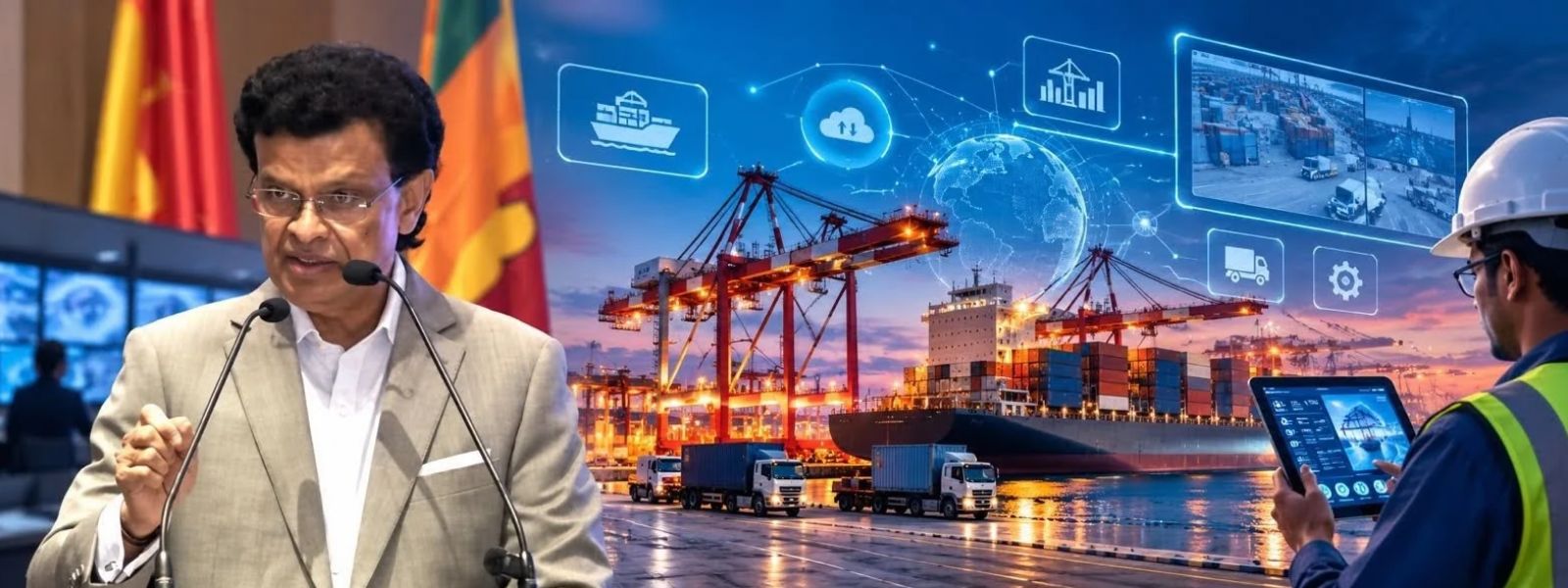
COLOMBO (News 1st); The Port of Colombo already ranks among the world's leading container hubs, handling billions of dollars in trade each year. But according to Sri Lanka Ports Authority Chairman Dr. Parakrama Dissanayake, the port's next leap forward will not be driven by more cranes, bigger yards or additional manpower. It will be driven by intelligence, connectivity and digital transformation.Addressing a workshop on Maritime Single Window and Port Community Systems, Dr. Dissanayake painted a picture of a global shipping industry under immense pressure, with congestion and supply chain disruptions continuing to challenge major ports around the world."Globally, as we all know, supply chains have been disrupted, facing enormous challenges on ports. On any given day, 4.2 million TEUs are awaiting a berth."While Colombo is performing better than many ports internationally, he noted that between 10,000 and 12,000 TEUs are still waiting for berthing opportunities outside the Port of Colombo on a daily basis.Highlighting the scale of operations, Dr. Dissanayake said the Port of Colombo is expected to handle approximately nine million TEUs in 2026, maintaining its status among the world's top 20 container ports.Yet, perhaps the most striking figure was the port's contribution to international commerce."The Port of Colombo's contribution towards global and regional trade through transshipment is approximately US$250 billion. I repeat that figure. It's approximately US$250 billion."In addition, Colombo facilitates approximately US$30 billion worth of Sri Lanka's merchandise trade, stressing on its central role in both the national economy and regional supply chains.Traditionally, ports have expanded capacity by constructing additional berths, increasing yard space, investing in machinery and hiring more personnel. However, Dr. Dissanayake argued that the future lies elsewhere."We hardly speak of increasing port capacity through digital platforms like PCS and the Maritime Single Window."According to studies cited by the SLPA Chairman, reducing container dwell time from 11 days to five days could increase terminal capacity by an astonishing 118 percent. A further reduction from five days to just 3.3 days could raise yard capacity by another 53 percent.The scale of inefficiencies associated with documentation is equally significant."Going by IMO data, average time spent on documentation at each port of call was 191 minutes."With approximately 4,100 vessel calls handled annually by the Port of Colombo, the port spends around 13,000 hours every year dealing with paper-based documentation.To illustrate the transformative potential of digital systems, Dr. Dissanayake pointed to a competing port in West Asia that implemented a Port Community System and Maritime Single Window."By implementing a PCS and MSW, a competing port in West Asia was able to eliminate 42 million paper document exchanges and 12.7 million port visits."He also cited a developed-country port that reported annual logistics savings of US$270 million through similar digital initiatives, compared with the US$17 million investment currently being directed toward modernising Colombo's operations.For Colombo, the expected benefits are substantial. Faster vessel turnaround times, stronger transshipment reliability, improved container dwell times and lower operating costs for shipping lines could significantly enhance the port's competitiveness."By coming up with this system, we can reduce operating costs for our clients and for our shipping lines."Dr. Dissanayake also expressed appreciation to the United States Government for its support toward the modernisation initiative, describing it as an important opportunity for Sri Lanka's port sector."Ports of yesterday competed on infrastructure. Ports of today compete on efficiency. Ports of tomorrow will compete on intelligence and connectivity."